
Vanguard vs InvestEngine is a common comparison for UK investors looking for a low-cost Stocks and Shares ISA.
Both platforms are popular with long-term and passive investors, but they take different approaches. Vanguard provides access to its own funds and ETFs, while InvestEngine is an ETF-only platform offering investments from Vanguard, iShares, HSBC, SPDR and other providers.
For investors comparing Vanguard vs InvestEngine, the main differences are account fees, investment choice, portfolio tools and whether you prefer traditional funds or ETFs.
This guide compares Vanguard and InvestEngine ISA accounts, including their current fees, investment options, beginner suitability and key pros and cons.
If you are still comparing providers, see our guide to the Best Stocks and Shares ISA platforms in the UK.
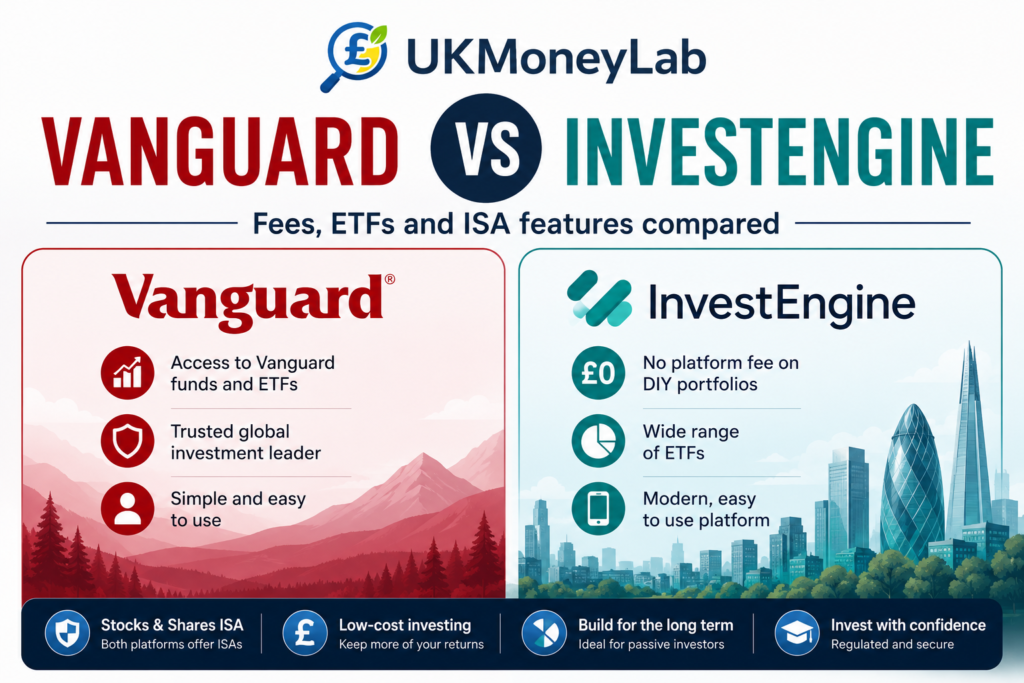
Quick answer: Vanguard vs InvestEngine
InvestEngine is generally cheaper for investors using a DIY ETF portfolio because it currently charges no platform fee or dealing commission. Investors still pay the ongoing charges of their chosen ETFs.
Vanguard charges £4 per month when the combined invested balance across relevant self-managed Vanguard accounts is below £32,000. At £32,000 and above, it charges 0.15% a year, capped at £375.
Choose Vanguard if you want access to Vanguard mutual funds, including funds such as LifeStrategy and the FTSE Global All Cap Index Fund.
Choose InvestEngine if you want a wider choice of ETFs, no DIY platform fee and portfolio tools such as fractional investing and automated rebalancing.
For many investors, the decision comes down to traditional funds and simplicity versus wider ETF choice and lower platform fees. Vanguard’s current self-managed fee structure and InvestEngine’s zero-fee DIY portfolio pricing are confirmed on their official sites.
Vanguard vs InvestEngine comparison table
| Feature | Vanguard ISA | InvestEngine ISA |
|---|---|---|
| Stocks and Shares ISA | Yes | Yes |
| Self-managed account fee | £4/month below £32,000; 0.15% above, capped at £375 | £0 for DIY portfolios |
| Dealing commission | No charge for funds or bulk ETF dealing; optional live ETF dealing may cost extra | £0 for DIY portfolios |
| Investment choice | Vanguard funds and ETFs only | 870+ ETFs from multiple providers |
| Mutual funds/OEICs | Yes | No |
| Individual shares | No | Yes |
| Fractional investing | Available for eligible investments | Yes |
| Managed portfolio option | Yes | Yes |
| Best for | Vanguard funds and simpler fund investing | Low-cost DIY ETF portfolios |
| Main drawback | Limited to Vanguard investments and minimum fee below £32,000 | ETFs only; no traditional mutual funds |
Fees checked in July 2026. Investment fund and ETF charges still apply. Vanguard’s £4 minimum applies to relevant self-managed accounts where the combined invested balance is below £32,000; Junior ISAs and certain managed-only arrangements are treated differently.
InvestEngine referral offer
New InvestEngine customers can currently get a randomly generated investment bonus worth between £20 and £200 when they sign up through a referral link and invest from £100.
- Open and fund an InvestEngine ISA, GIA or SIPP.
- Invest at least £100 into your portfolio.
- Claim a randomly generated bonus between £20 and £200.
- The bonus must usually remain invested for at least 12 months.
Capital at risk. The value of investments can go down as well as up. New customers only. Minimum investment and eligibility criteria apply. Bonus amount is randomly generated. Referral terms and conditions apply. UKMoneyLab may receive a referral bonus if you sign up through this link.
Vanguard vs InvestEngine fees
Fees are one of the clearest differences between Vanguard and InvestEngine. The Vanguard vs InvestEngine fee comparison becomes particularly important for portfolios below £32,000, where Vanguard’s fixed £48 annual fee represents a larger percentage of the investment.
Vanguard ISA fees
Vanguard’s self-managed Stocks and Shares ISA charges:
- £4 per month, or £48 per year, when the combined invested balance across relevant Vanguard accounts is below £32,000;
- 0.15% per year when that balance reaches £32,000 or more;
- a maximum annual account fee of £375.
Investors also pay the ongoing costs of their chosen Vanguard funds or ETFs. Vanguard’s published fund management costs currently vary by investment.
InvestEngine ISA fees
InvestEngine currently charges:
- no platform fee for DIY portfolios;
- no dealing commission for DIY ETF purchases and sales;
- underlying ETF charges determined by the investments selected.
InvestEngine also offers Managed and LifePlan portfolios. Its current help page states that these charge 0.25% per year, so the zero-fee comparison only applies to DIY portfolios.
Which is cheaper: Vanguard or InvestEngine?
For DIY ETF investors, InvestEngine is cheaper on explicit platform and dealing fees because it charges neither.
Vanguard’s £48 minimum annual fee is particularly noticeable on smaller portfolios. For example, £48 represents:
- 0.96% of a £5,000 portfolio;
- 0.48% of a £10,000 portfolio;
- 0.192% of a £25,000 portfolio.
At £32,000, Vanguard’s 0.15% percentage fee also equals £48. Above that level, the fee increases with the portfolio until reaching the £375 cap.
However, platform fees are not the only consideration. Vanguard provides mutual funds that InvestEngine does not offer, and the total cost also depends on the underlying fund or ETF charges.
Vanguard vs InvestEngine fees: example costs
| Portfolio size | Vanguard self-managed account fee | InvestEngine DIY platform fee | Cheaper on platform fee |
|---|---|---|---|
| £5,000 | £48/year | £0 | InvestEngine |
| £10,000 | £48/year | £0 | InvestEngine |
| £25,000 | £48/year | £0 | InvestEngine |
| £32,000 | £48/year | £0 | InvestEngine |
| £50,000 | £75/year | £0 | InvestEngine |
| £100,000 | £150/year | £0 | InvestEngine |
| £250,000 | £375/year | £0 | InvestEngine |
This table compares platform/account fees only. Underlying fund or ETF charges, spreads and other investment costs may still apply.
For more information, see our guide to ISA fees explained in the UK.
Investment choice: Vanguard vs InvestEngine
Vanguard’s UK platform only offers Vanguard investments. These include:
- index funds;
- actively managed funds;
- LifeStrategy funds;
- Target Retirement funds;
- Vanguard ETFs.
This narrower selection may appeal to investors who want a simpler choice and specifically want Vanguard mutual funds.
InvestEngine focuses exclusively on ETFs but offers a much broader range of ETF providers. Its current website advertises more than 870 ETFs, including investments from Vanguard, iShares and other major issuers.
InvestEngine therefore offers broader ETF-provider choice, while Vanguard offers broader investment-structure choice because it includes both mutual funds and ETFs.
For an explanation of the difference, see our ETF vs OEIC guide.
Can you hold VWRP in an InvestEngine ISA?
InvestEngine offers Vanguard ETFs, and its platform may include the Vanguard FTSE All-World UCITS ETF, commonly identified by its accumulating ticker VWRP.
This means an investor may be able to hold a Vanguard global ETF through an InvestEngine ISA without using Vanguard’s own platform.
The distinction is important:
- VWRP is an ETF, so it can be available through ETF platforms such as InvestEngine.
- The Vanguard FTSE Global All Cap Index Fund is an OEIC/mutual fund, so it is not available through InvestEngine.
Availability can change, so readers should confirm the current ETF list directly on InvestEngine before opening or transferring an account. InvestEngine confirms that its platform includes hundreds of ETFs from providers including Vanguard.
Which is better for beginners: Vanguard or InvestEngine?
Both platforms can be beginner-friendly, but they suit different types of beginner.
Vanguard may be easier for someone who wants to choose a single diversified fund, such as a LifeStrategy fund or the Vanguard FTSE Global All Cap Index Fund, and then invest regularly.
InvestEngine may suit a beginner who specifically wants ETFs and values a zero-fee DIY account. Its fractional investing and portfolio tools can make it easier to construct and maintain an ETF portfolio, although selecting several ETFs requires more investment decisions.
A beginner who wants the fewest possible decisions may prefer Vanguard’s narrower fund range.
A beginner comfortable selecting an ETF, such as a global equity ETF, may prefer InvestEngine’s lower platform costs.
New investors may also find our Beginner ISA guide useful.
Vanguard Pros and Cons
Pros
- Access to Vanguard index funds, active funds and ETFs
- Includes LifeStrategy and Target Retirement funds
- Straightforward long-term investing approach
- Strong range of educational information
- Suitable for regular fund investing
Cons
- £48 minimum annual fee below £32,000
- Limited to Vanguard investments
- No individual company shares
- Narrower ETF range than InvestEngine
- Optional live ETF trades may involve a dealing fee
InvestEngine Pros and Cons
Pros
- No platform or dealing fee for DIY portfolios
- Wide selection of ETFs from multiple providers
- Fractional ETF investing
- Automated portfolio and rebalancing tools
- Access to Vanguard ETFs without using Vanguard’s platform
Cons
- No traditional mutual funds or OEICs
- No individual company shares
- DIY investors must choose and construct their ETF portfolio
- Managed and LifePlan portfolios are not fee-free
- Smaller and newer platform than Vanguard
Final verdict: Vanguard vs InvestEngine?
Vanguard may be better suited to investors who want access to Vanguard mutual funds and prefer a narrow, straightforward range of long-term investments.
InvestEngine may be better suited to investors who want to build a DIY ETF portfolio, access ETFs from several providers and minimise platform fees.
For investors who only want a broad Vanguard ETF such as VWRP, InvestEngine may offer the more cost-effective platform because its DIY portfolios have no platform fee.
For investors who specifically want Vanguard mutual funds such as LifeStrategy or the FTSE Global All Cap Index Fund, Vanguard is the more appropriate of the two because InvestEngine does not offer traditional mutual funds.
Ultimately, the Vanguard vs InvestEngine decision depends on whether you prefer access to traditional Vanguard funds or a wider range of ETFs with lower DIY platform fees.
Overall:
- Choose Vanguard for Vanguard mutual funds and a simpler fund-led experience.
- Choose InvestEngine for wider ETF choice and lower DIY platform fees.
For information on Vanguard’s current fees and investment options, visit the official Vanguard Investor website.
For the latest details on InvestEngine’s ISA and ETF offering, visit the official InvestEngine website.
Related Stocks & Shares ISA Guides
Still comparing investment platforms? You may also find these UKMoneyLab guides helpful before choosing a Stocks & Shares ISA.
Vanguard ISA Review
Explore Vanguard’s fees, investment options and who the platform may suit.
Read Review →InvestEngine ISA Review
Learn about InvestEngine’s fees, features and who it may suit.
Read Review →Cheapest Stocks & Shares ISA
Compare platform fees across the UK’s leading S&S ISA providers.
Compare →Best Stocks & Shares ISA
Compare some of the UK’s most popular Stocks & Shares ISA providers.
Read Guide →FAQs
Is InvestEngine cheaper than Vanguard?
InvestEngine is generally cheaper for DIY ETF portfolios because it does not charge a platform fee or dealing commission. Vanguard charges £4 per month below £32,000, then 0.15% per year, capped at £375.
Can I buy Vanguard funds on InvestEngine?
You can buy eligible Vanguard ETFs through InvestEngine, but not Vanguard mutual funds or OEICs such as LifeStrategy or the FTSE Global All Cap Index Fund.
Can I hold VWRP in an InvestEngine ISA?
InvestEngine offers Vanguard ETFs and may offer VWRP, the accumulating Vanguard FTSE All-World ETF. Investors should check its current ETF list before opening or transferring an ISA.
Which is better for beginners, Vanguard or InvestEngine?
Vanguard may be simpler for beginners who want one diversified mutual fund. InvestEngine may suit beginners who prefer ETFs and want to avoid a platform fee.
Does InvestEngine only offer ETFs?
Yes. InvestEngine is an ETF-focused platform and does not offer individual company shares or traditional mutual funds.
Does Vanguard only offer Vanguard investments?
Yes. Vanguard’s UK direct platform only provides Vanguard funds and ETFs; it does not offer investments from providers such as iShares or HSBC.
Which platform is better for ETF investing?
InvestEngine generally offers wider ETF choice and lower DIY platform fees. Vanguard may still appeal to investors who only want Vanguard ETFs and prefer its platform.